
Archive

Posts Tagged ‘Solitaire engagement rings’

Basics of Diamond Engagement Rings

January 12th, 2010 admin No comments

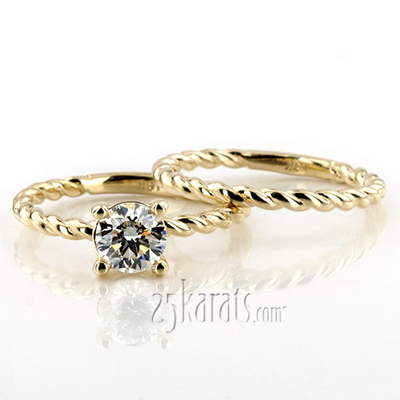
Ribbon Diamond Engagement Ring

If you’re thinking of buying that perfect engagement ring for the sweetheart in your life, then look no further than diamond engagement rings. Long considered a classic standard for the engagement ring, diamonds are beautiful gemstones, symbolic of the undying bond between you and the love of your life.

However, if you don’t know diamond engagement rings from a baseball diamond, then you could use a few pointers from 25karats that will help you ensure that whatever diamond ring you purchase, it will be of the highest-quality and impeccable standards…

…just like that of your sweetheart!

Diamond Engagement Ring Cuts. Getting the perfect diamond engagement ring cut can make all of the difference to your future fiancée. Remember, this is the perfect engagement ring that she’s been dreaming about since she was a little girl – and you want to ensure that you get it right!

There are a multitude of cuts available to the ring shopper – however, they can all be broken down into three categories: the step cut, the brilliant cut and the mixed cut. The step cut has simplistic incisions made into the face of the diamond, which gives off the appearance of steps (hence the name). This kind of cut gives a romantic vintage look to the diamond, and is popular with stone-shape styles like the emerald, or rectangular, shape.

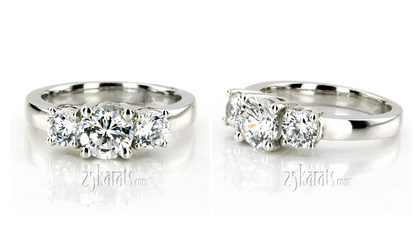
The brilliant cut creates a multitude of facets within the diamond, which maximizes the amount of light that the stone reflects; hence, this cut is immensely popular with those who love to optimize the sparkle in their gemstones. Common shapes within this category include the classic round, solitaire and oval diamond engagement rings.

Finally, the mixed cut combines the step and brilliant cuts to form a breathtaking and gorgeous diamond engagement ring. By combining these cuts, the mixed cut minimizes any flaws within the diamond while maximizing the brilliancy of the gemstone. The most common shapes for this cut include the ever-popular princess shape, trillium and heart-shaped diamond engagement rings.

The Four Cs. Besides the cut of the perfect engagement ring, you’ll need to consider the next three of the four Cs of your diamond: color, clarity and carat. Once you’ve chosen the cut, these other three factors determine the final price and quality of the potential diamond purchase. To further understand these factors, let’s break them down into their respective categories:

  • The color of the diamond can have a huge influence on the price of the engagement ring. Colorless diamonds (often known as “white” diamonds) are the most common – but hardly so in terms of quality! – and are usually graded on a D-E-F scale. The latter letters (i.e. G through Z) are also used to determine color, and imply that the diamond has yellowish tints. The more yellow the diamond, the less expensive it will be. Colored diamonds have their own grading system. Fluorescence can also affect color, as seemingly colorless diamonds can appear yellow under this type of light.

  • The carat of the diamond will probably be more familiar to you, as the higher the carat weight, the more expensive the diamond will be. Quite simply, the carat is the measure of mass for a diamond, and is often referred to by point value (with each point represented 200 milligrams). A diamond engagement ring’s total carat weight will be the sum of all of the same stones within the ring.

  • Finally, the clarity of the diamond ring is a measurement of how flawless and clear a diamond is. While most diamonds contain minor flaws, the more cracked and visible these flaws, the lower the quality (and the price) of the diamond. Clarity of a diamond can be improved with fracture filling treatments; however, look for a diamond that has a clarity rating between VS1 to IF, as any flaws within the diamond are not easily seen, even by an experienced grader.


    Remember, you don’t have to be an experienced jeweler to determine these important diamond factors; insist on a diamond grade certificate from a reputable gemological lab (such as GIA or EGL), as all of the relevant diamond ratings will be shown on the certificate.


    Diamond Engagement Ring Settings. The setting of the ring will play a big role in how much your sweetheart will love her unique engagement ring, as there are many different designs out there. We’ll explore some of the more popular settings:

  • The tension ring> setting has risen the ranks in popularity. The engagement ring band itself holds the diamond in place, instead of the more traditional prong setting. Despite the simplistic style, there’s an enormous about of work that goes into making a tension engagement ring, as the gemstone is held in through pressure alone.

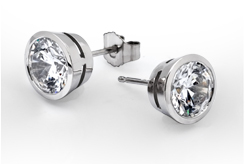
  • In the cathedral setting, the sides of the ring band swoop up into a beautiful arch that demonstrates the beauty of the centerpiece diamond. Bezel settings are similar to cathedral settings, and can show off a smaller stone that might get overshadowed with other setting styles.

  • The solitaire setting engagement ring is a gorgeous and elegant design, as a centerpiece diamond is held into place by a prong setting. It’s perfect for the fiancée who has understatedly elegant tastes.

  • The pave setting is designed to show off the band itself, rather than a center stone like with other engagement ring styles. This gives off a smooth and luxurious appearance, as a multitude of smaller stones are used in this setting type.


    There are many other setting styles out there – be sure to have a friend clue you in on which one your future fiancée has been dreaming about!

    Bezel Set Diamond Engagement Ring

    Metal Type. Again, your fiancée might have a keen idea of what she wants for her ring, so be sure that you’re prepped with the right information before getting that perfect diamond engagement ring!

    Remember, you don’t want the metal of the band to upstate the diamond; rather, it should protect, highlight and supplement whichever diamond style and setting you use. Platinum and palladium represent the most popular kinds of metals, as these are strong yet gorgeous metals protect the diamond while highlighting its clarity and color. White-gold metal has a strong resemblance to platinum and is considerably cheaper, although it’s not as strong.

    Finally, traditional yellow gold can be used with an engagement ring, although this gives the best results for colorless diamonds – yellow gold can highlight any yellow imperfections that a diamond might have.

    Choosing an elegant, gorgeous and perfect engagement ring for the love of your life can be a thrilling and wonderful experience.

    Share and Enjoy:
    • Print
    • Digg
    • Sphinn
    • del.icio.us
    • Facebook
    • Mixx
    • Google Bookmarks
    • MySpace
    • Technorati
    • Twitter
  • Sleek, Stylish And Gorgeous: Solitaire Diamond Engagement Rings

    October 14th, 2009 naz No comments

    Getting engaged will be one of the most important moments in your life – and you want a beautiful and unique engagement ring that reflects just how special your relationship is with your sweetie! If you’re not sure which perfect engagement ring is right for you – or if you don’t know the difference between princess cut engagement rings and anniversary bands – then it’s time to explore the beautiful and sleek world of solitaire diamond engagement rings.

    Princess Cut Engagement Ring

    Princess Cut Engagement Ring

    Deceptively simplistic yet extremely gorgeous in design, solitaire diamond engagement rings are one of the most popular choices for high-quality engagement rings. As solitaire means “one”, a single diamond is mounted on a band, and there are no accent or side stones to distract from the single diamond. The meaning behind this unique engagement ring is a profound one: a single diamond represents the union between you and your sweetie. It signifies the single and powerful love that two people will share for the rest of their lives.

    There are many different types of solitaire diamond engagement rings, all of which lend a unique quality to this perfect engagement ring. As one of the more popular solitaire choices, princess cut engagement rings feature square-cut diamonds mounted on a band. Princess cut engagement rings are a perfect choice if you’re looking for a larger diamond. For those looking for smaller diamonds, round cut engagement rings are another timeless choice, and can make smaller diamonds look much larger. Rounding out the next popular choices are emerald cut engagement rings and oval cut engagement rings. Originally designed for emeralds (hence the origin of the name), emerald cut engagement rings are cut in a rectangle shape with cropped corners. Oval cut engagement rings feature an elongated stone, which lends a brilliant sheen to the gemstone. Oval cut engagement rings are also popular choices for three stone engagement ring settings.

    Round Cut Engagement Ring

    Round Cut Engagement Ring

    When it comes to your unique engagement rings, settings for solitaire diamond engagement rings represent another important decision. While traditional diamond solitaire rings feature a 4-prong or 6-prong setting – in which the diamond is raised up from the band – the perfect engagement ring or unique wedding band can also feature bezel, lucida and tension settings as well. Many people choose to highlight their diamond with a platinum setting, which compliments both the color and clarity of the solitaire diamond. Other popular choices for solitaire diamond engagement rings include white gold and yellow gold. Palladium also represents an excellent choice for diamond solitaire rings, as it’s a strong yet gorgeous metal that serves to highlight the uniqueness and purity of your diamond.

    Share and Enjoy:
    • Print
    • Digg
    • Sphinn
    • del.icio.us
    • Facebook
    • Mixx
    • Google Bookmarks
    • MySpace
    • Technorati
    • Twitter