Gemstones
Sapphire
The hardest colored gemstone in common use, in every color but one, and the most practical choice for a ring you intend to wear every day.
Sapphire is the gem variety of corundum, a crystalline form of aluminium oxide. Trace elements decide the color: iron and titanium give blue, chromium gives red.
That last detail carries a naming convention worth knowing before you shop.
Color: what to look for
Blue is what most people picture, but the range is enormous, and the non-blue colors: often sold as “fancy sapphires”, are frequently better value for the same quality.
The most sought-after blue is a medium to medium-dark, vividly saturated blue that holds its color under different lighting. Stones that go inky in low light are overly dark; stones that wash out in daylight are undersaturated.
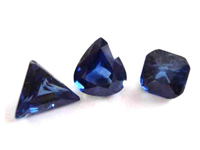
Blue
The classic. Kashmir stones are famous for a velvety cornflower blue, Burmese for a rich royal blue, Ceylon for a lighter, brighter tone. Secondary green tints lower value; a hint of violet generally does not.
Padparadscha
A delicate pink-orange found chiefly in Sri Lanka, named for the lotus blossom. Rare enough to command prices near fine blue, and genuinely difficult to match if you ever need a pair.
Pink, yellow, green, purple
Fancy sapphires. All the durability of blue sapphire, usually at a lower price per carat, and a good route to an unusual engagement ring.
Star sapphire
Needle-like inclusions of rutile scatter light into a six-rayed star, best seen in a cabochon under a single light source. Here the inclusions are the point, not a flaw.
Judging color is a skill in itself, our gemstone color guide breaks it into hue, tone and saturation so you can compare stones deliberately rather than by impression.
Why sapphire suits an everyday ring
Sapphire rates 9 on the Mohs scale, behind only diamond among gemstones in common jewelry use. In practice that means very few things you encounter day to day are hard enough to scratch it, ordinary dust, which contains quartz at Mohs 7, is what slowly dulls softer stones, and it does not touch sapphire.
| Stone | Mohs hardness | Suitable for daily wear? |
|---|---|---|
| Diamond | 10 | Yes |
| Sapphire & ruby | 9 | Yes: the best colored-stone choice |
| Emerald | 7.5–8 | With care; typically included and brittle |
| Opal, tanzanite, pearl | 5–6.5 | Occasional wear only |
Origin, treatment, and price
Two factors move sapphire prices in ways that surprise first-time buyers.
- Origin carries a premium. Sapphires are mined in Sri Lanka, Madagascar, Myanmar, Thailand, Australia, Tanzania, and Montana, among others. Historic Kashmir and Burmese material trades far above equivalent-looking stones from newer sources. If origin matters to you, insist on a laboratory report; if it does not, you can buy a great deal more color for the money.
- Almost all sapphire is heat-treated. Controlled heating to improve color and clarity has been practiced for centuries, is permanent, and is fully accepted in the trade. It is not a defect. But untreated stones of fine color are rare and priced accordingly, so treatment status must be disclosed.
Worth knowing
September's birthstone
Sapphire is the birthstone for September and the traditional gift for 5th and 45th wedding anniversaries.
A long royal association
Sapphire has been associated with loyalty and nobility for centuries, a link renewed by several well-known royal engagement rings.
Made in laboratories too
Lab-grown sapphire has existed since the early 1900s and is chemically identical to mined. It should always be disclosed, and costs a fraction.
The Millennium Sapphire
At around 61,500 carats, this famous blue sapphire is a carved sculpture rather than a faceted gem: a reminder that record weights and gem quality are different things.
Setting a sapphire in a ring? The metal changes how the color reads, white metals keep a blue stone crisp, yellow gold warms it. Our precious metals guide covers the options.
Looking for a sapphire piece?
Browse our color stone rings, or talk to a consultant about sourcing a particular color, size, or certification.