
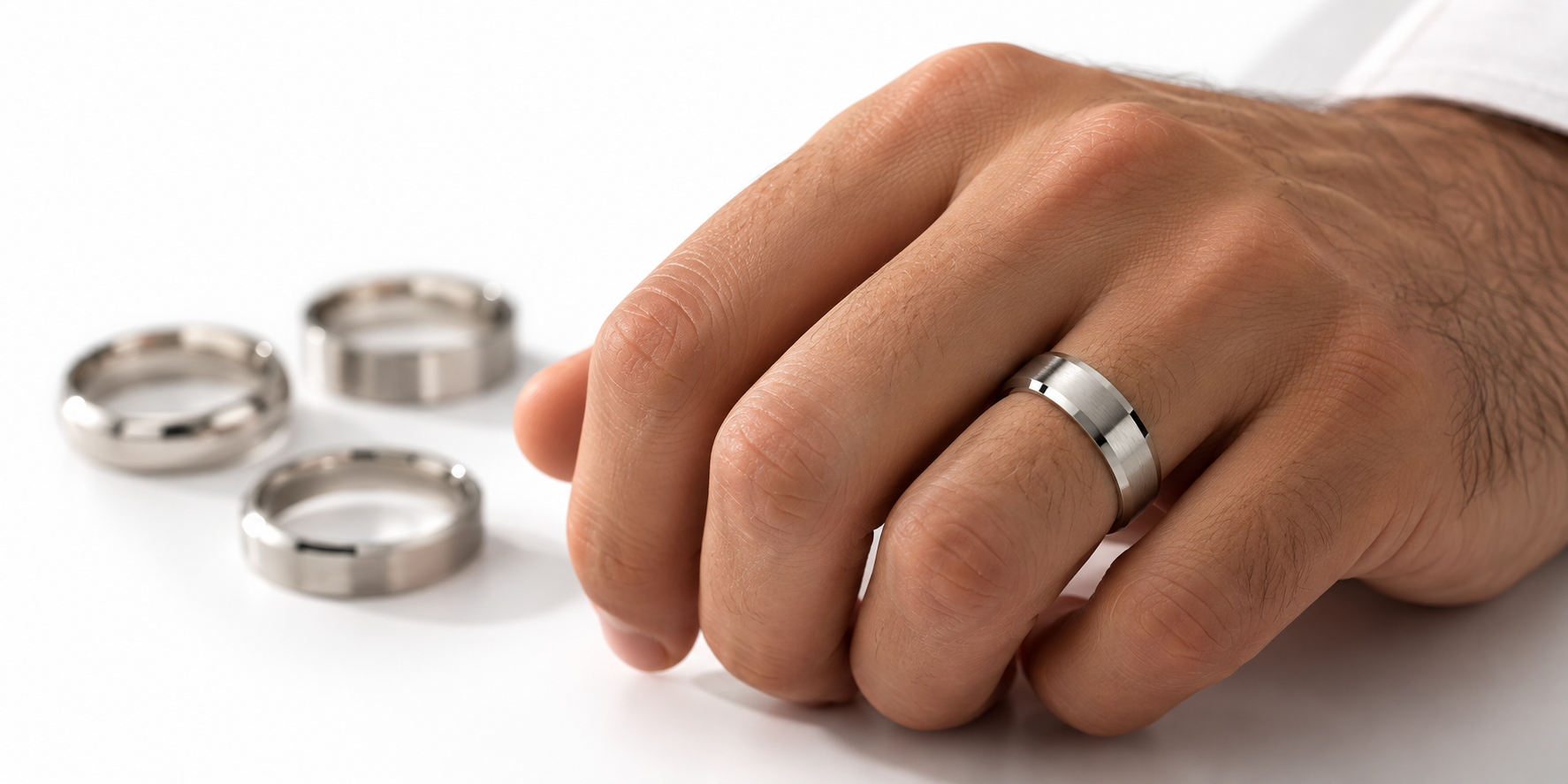
Wedding band profiles are the last thing most couples notice and the first thing you see on the hand. You can settle the metal, the width and the finish, then look down and realize the outside of the band has a shape you never chose.
The profile is the outside shape of the band: what you would see if you sliced it across and looked at the cut edge.
Here is what the common wedding band profiles look like, how each behaves on the finger, and how to choose.
What a Wedding Band Profile Actually Is
A band has two shapes: the outside and the inside. The outside is the profile. The inside is the fit, either comfort fit or standard fit, and that is a separate decision your finger feels more than your eye does.
A domed band can be comfort fit or standard fit, and so can a flat one. If the inside is what you are unsure about, our guide to comfort fit vs standard fit wedding bands covers it.
The Profiles You Will See Most
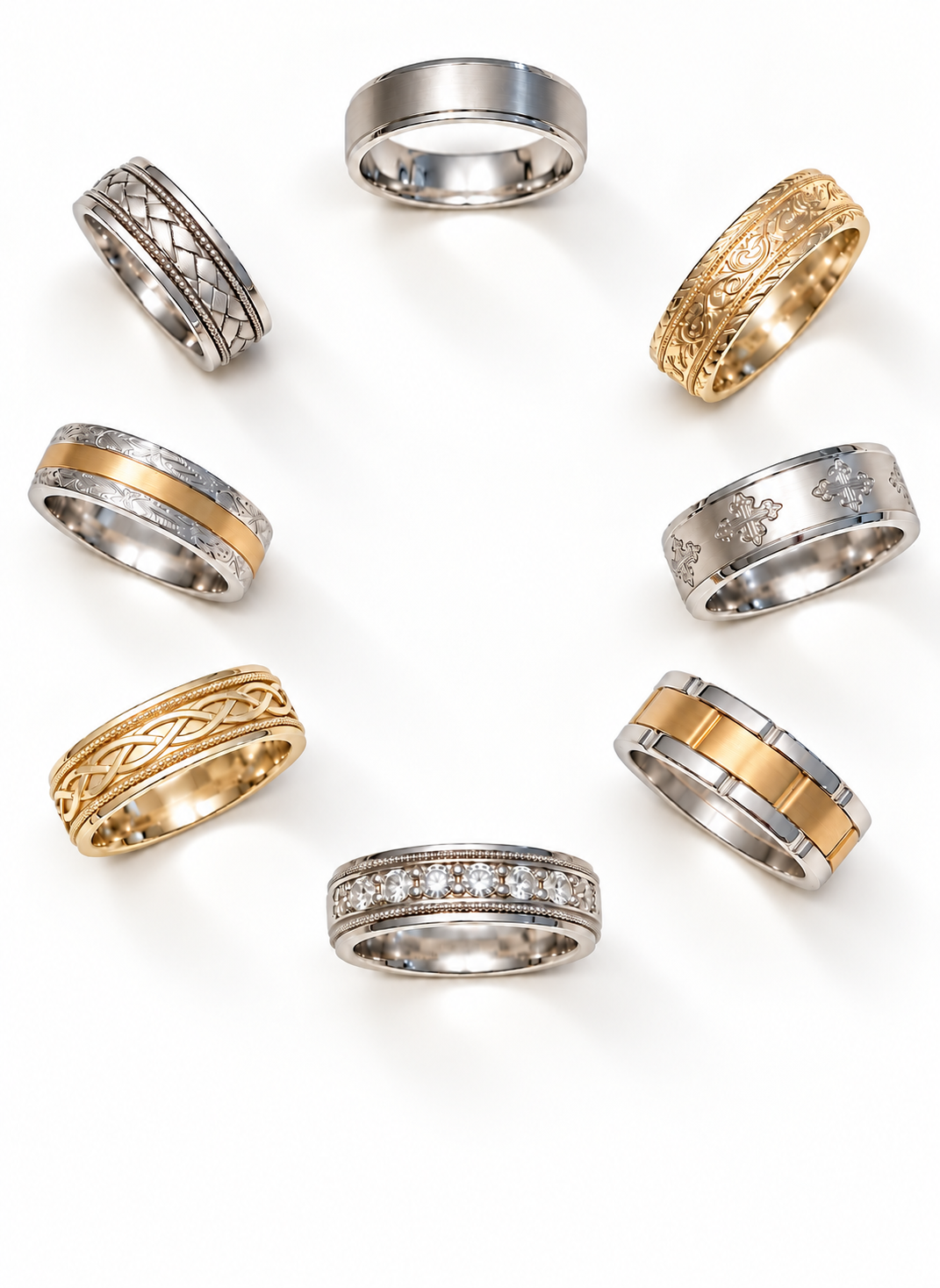
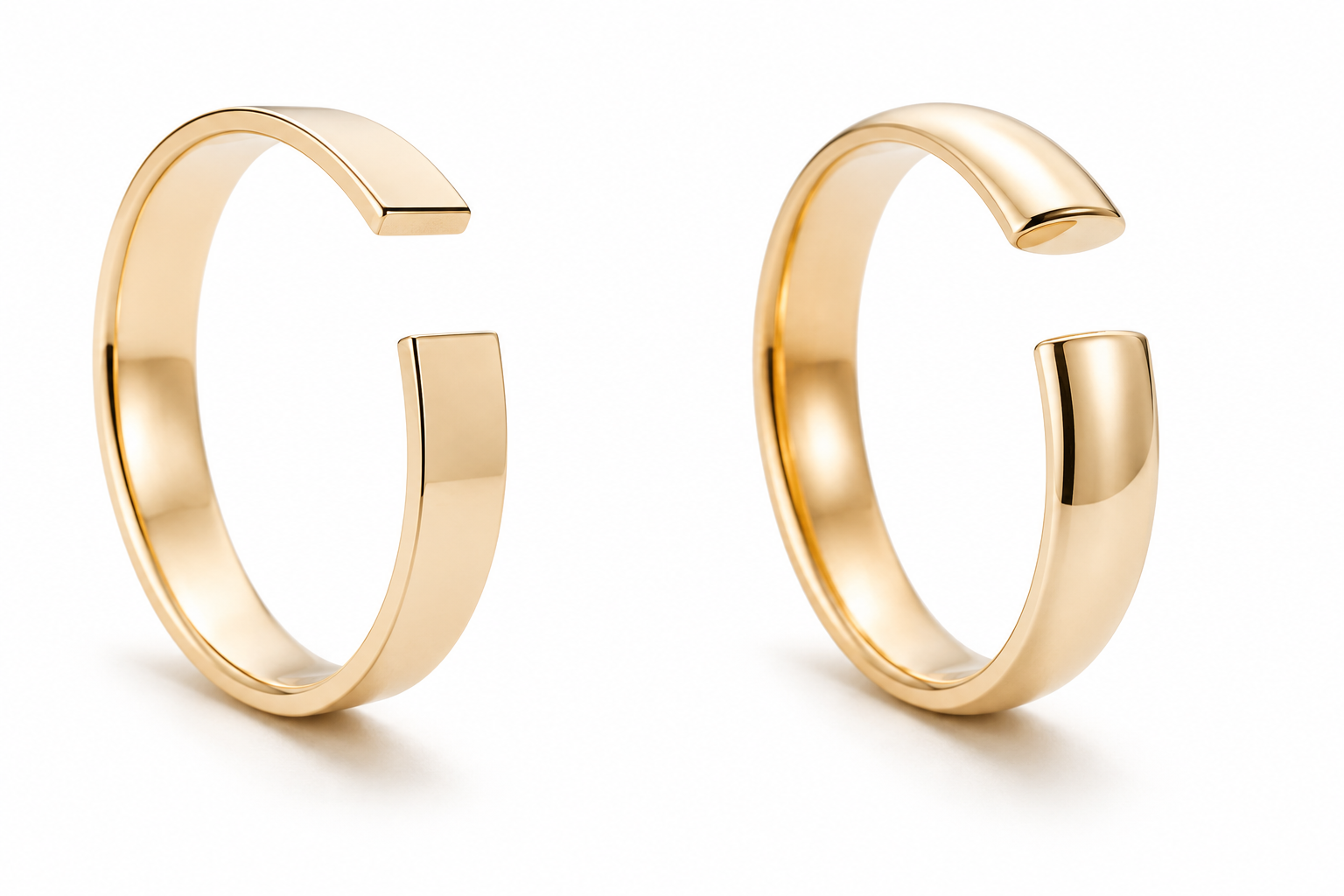
– Dome, also called half round. The highest point runs down the middle and the edges curve away. This is the traditional profile.
– Low dome. Nearly flat across the top, with the shoulders rounded off. Flatter than a dome, with soft edges.
– Flat, also called pipe cut. A flat top with straight walls and crisp corners. The most contemporary shape.
– Beveled edge. A flat top with an angled facet along each edge, so the band catches light on both sides.
Exterior Profiles, Seen End On
Each shape below is the outside of the band. The inside is a separate choice.
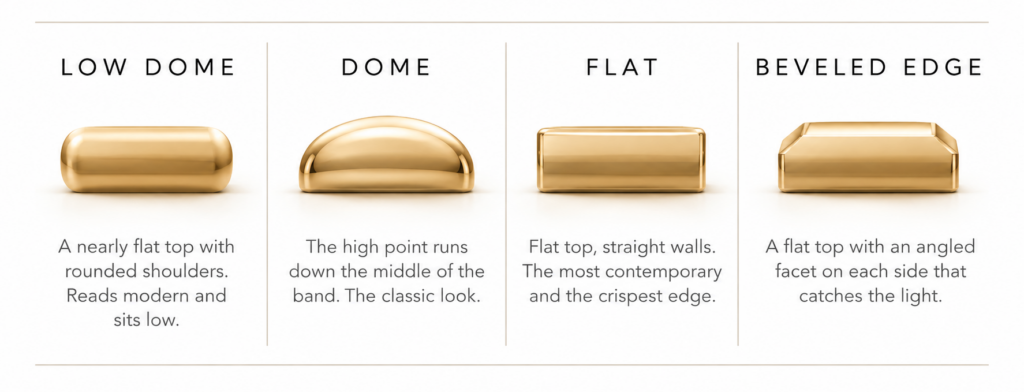
The diagram above is the clearest way to see it: a dome is a curve, a flat band is a rectangle, and a low dome sits between the two. A beveled edge keeps the flat top and angles both corners.
None of these shapes change the metal, the width or the finger size.
Domed vs Flat: What Changes on the Hand
In the domed vs flat wedding band question, the answer is mostly about edges. A domed band has no hard line along the outer surface, so your finger slides past the knuckle on a curve.
A flat wedding band has a distinct top and two visible walls. It reads sharper and more modern, and on a 6 mm band or wider those edges are part of the design.
A low dome band is the compromise. It looks flat from across a room and feels rounded where it touches your other fingers.
Half Round, Low Dome and Beveled Edge
Half round and dome mean the same thing in most catalogs, so a half round wedding band and a domed one are the same rounded shape. The Benchmark Plain Half-Round Dome Wedding Band is made from 2 mm to 8 mm.
A low dome wedding band flattens the top of that curve and keeps a small radius at the shoulders. The Low Dome Diamond Wedding Band is a 6 mm example.
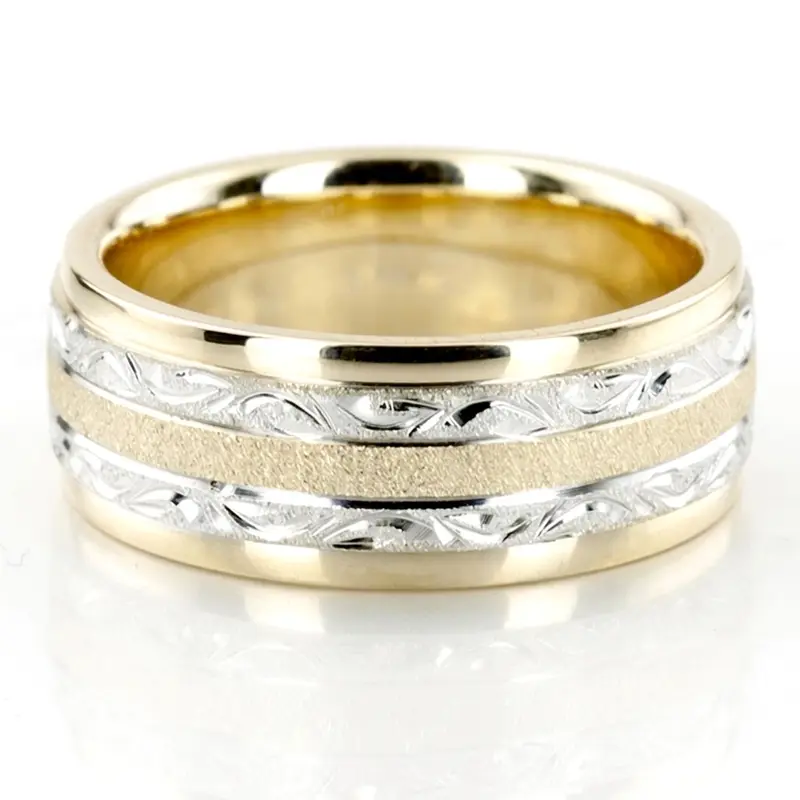
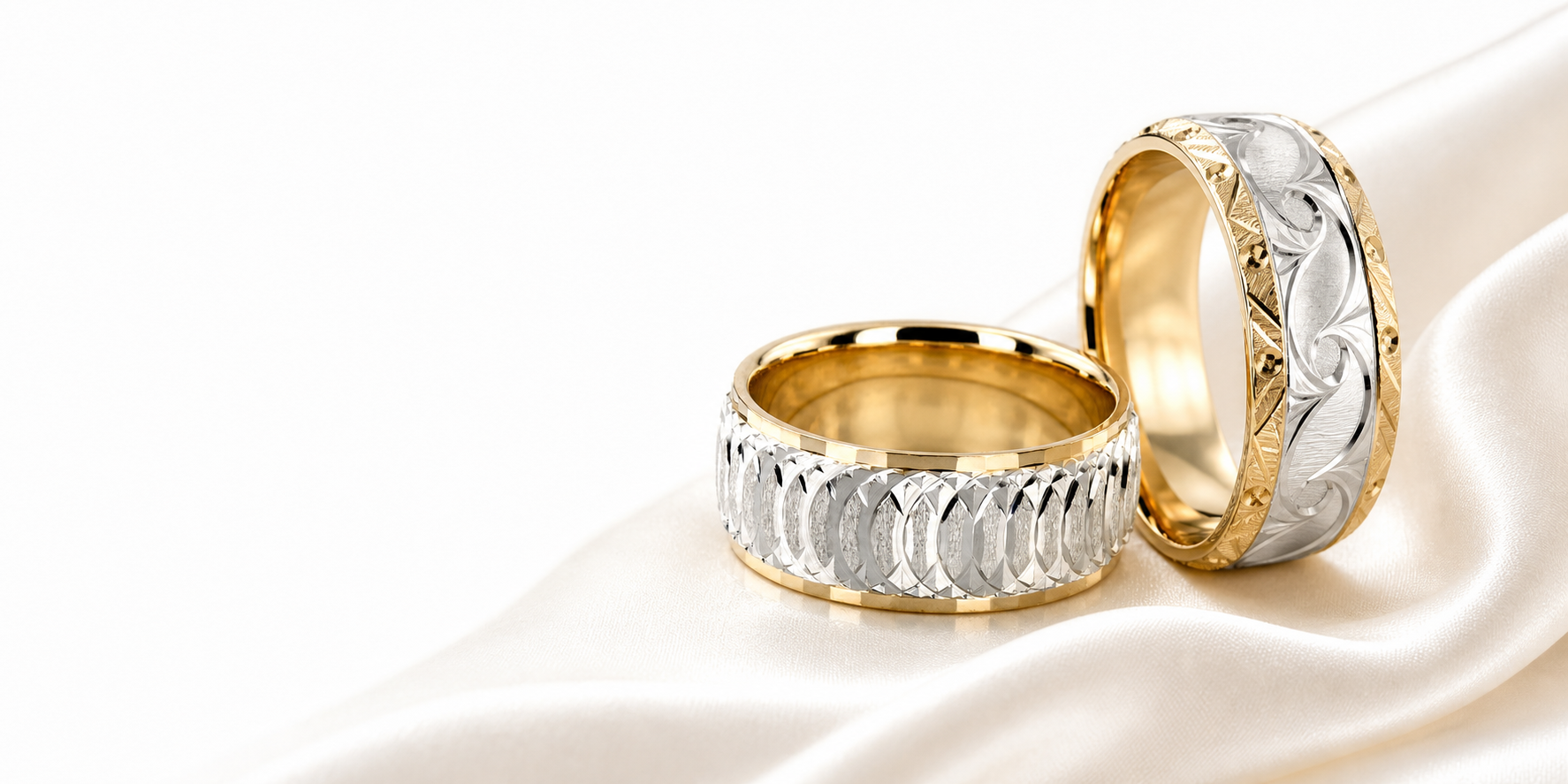
The Modern Beveled Edge Wedding Band keeps a flat top and cuts a facet along each edge. Those facets pick up light on both rims and take the sharpness out of the corners.
Which Profile Wears Best Over Time
Every profile wears where it touches things. A flat band shows scuffs along its corner edges first, because those edges catch on desks, car doors and gym equipment. A domed band spreads that contact across a curve, so a mark shows up as a small bright spot.
A beveled edge sits between the two, and a light polish later brings the facets back. A satin or brushed finish hides daily marks better than a high polish one, on any profile.
Choosing a Profile for Each Band
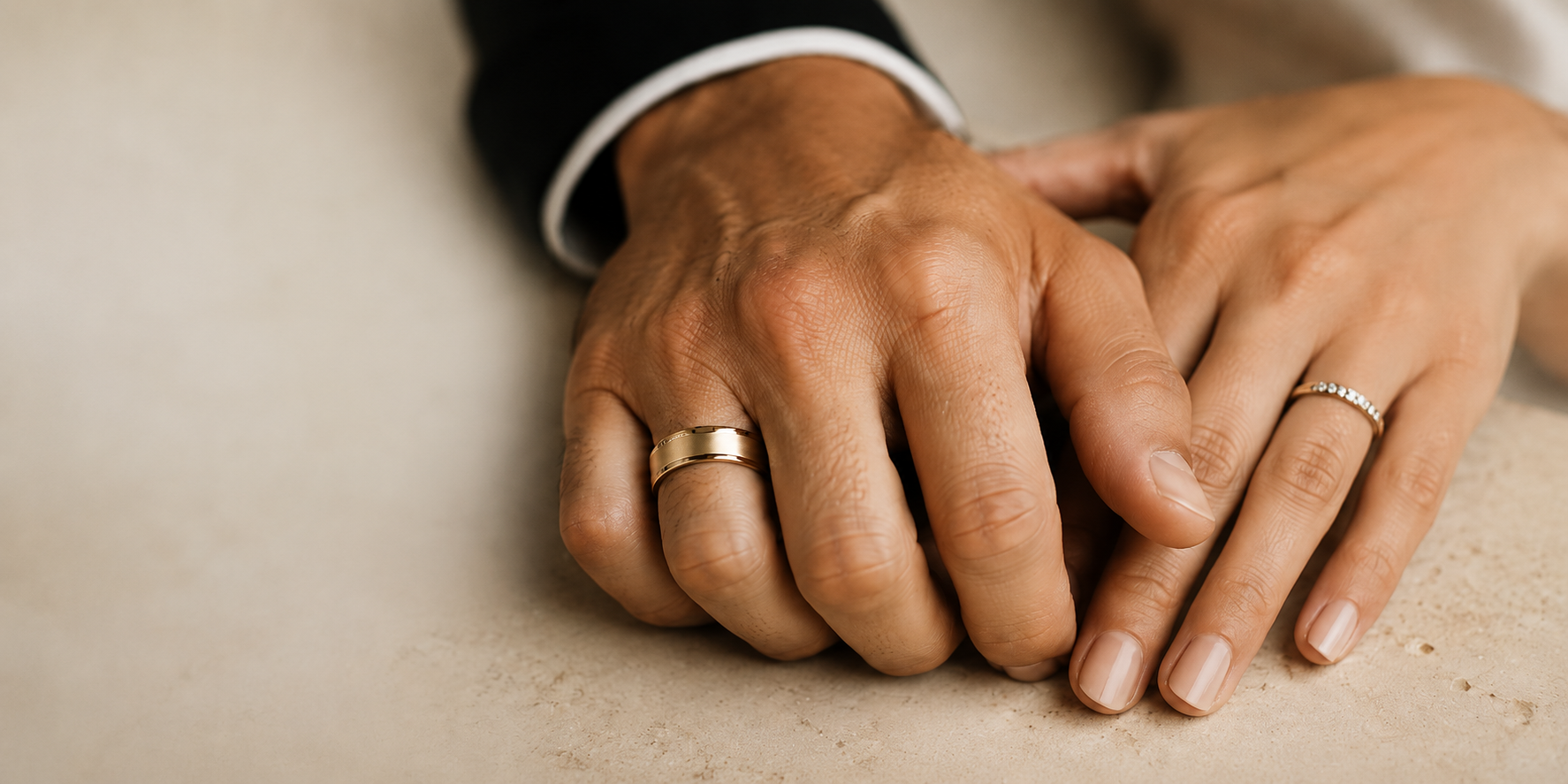
For men’s wedding bands, which are usually wider, a flat or beveled profile gives the band a deliberate, modern edge, and a dome keeps it classic. On a 7 mm band the profile decides whether the ring looks architectural or traditional.
For women’s wedding rings, a dome or low dome in 2 mm to 4 mm keeps the band delicate, and that is where most diamond-set styles live. Your two bands do not need the same profile to look like a pair.
Final Thoughts
There is no best wedding band profile, only the one that suits the hand. For a traditional look, choose a dome. For something crisp and modern, a flat or beveled edge. For the flat look with a softer feel, a low dome.
Every 25karats band is made to order in New York’s Diamond District, and the profile is listed on each product page under the shape name. Browse wedding bands to see the profiles style by style.
Reviewed by
25karats Jewelry Specialists