Jewelry Care
How to Clean Your Jewelry at Home
Restore the shine of gold, platinum, and diamond jewelry in five easy steps, using nothing more than warm water, dish soap, and a soft toothbrush.
By 25karats · Updated 2026 · 4 minute read
Everyday wear leaves a film of skin oils, lotion, and soap on jewelry that slowly dulls its sparkle. The fix is simpler than most people expect: a short soak in warm, soapy water and a gentle brush bring back most of the shine. No special products required.
Before you start
What you’ll need
Everything on this list is already in most kitchens:

Step 1
Mix a gentle cleaning solution
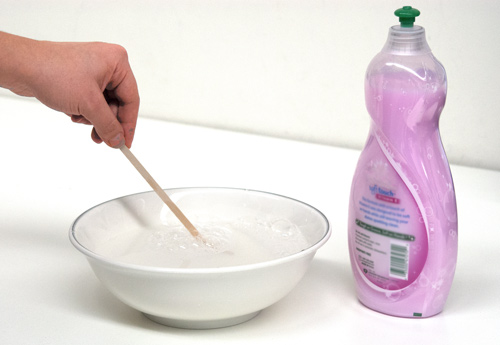
Fill the bowl with warm water and add a few drops of mild dish soap, then stir until lightly sudsy. Use regular dish soap only, never dishwasher detergent, which is abrasive enough to scratch precious metal.
Step 2
Soak your jewelry
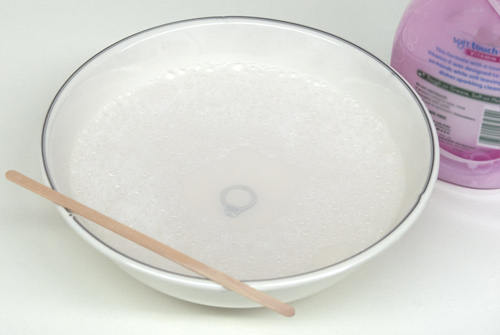
Place the piece in the bowl and let it soak for 15–20 minutes. The warm, soapy water loosens the oils and residue that build up in settings and crevices, so you won’t need to scrub.
Step 3
Brush gently
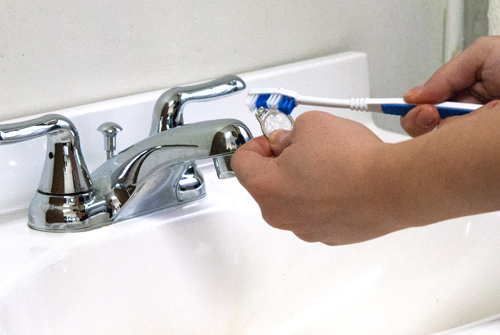
Lift the piece out and go over it with the soft-bristle toothbrush. Work into the small crevices, under the setting, and between side stones: that’s where buildup hides. Let the bristles do the work; there’s no need to apply pressure.
Step 4
Rinse thoroughly
Hold the piece firmly and rinse it under warm running water until every trace of soap is gone; leftover residue dries into a dull film. Close the drain first, or rinse over a second bowl.

Step 5
Dry and polish
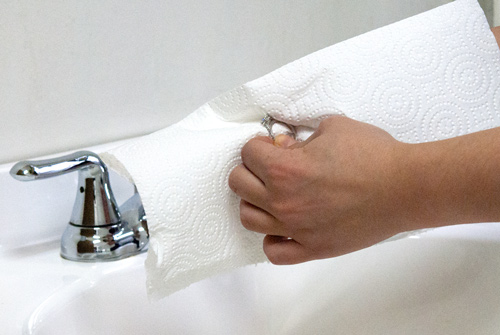
Pat the piece dry with a soft, lint-free cloth or paper towel, then let it air-dry completely before you wear it or put it away, since trapped moisture in a closed jewelry box can dull the finish.
The result
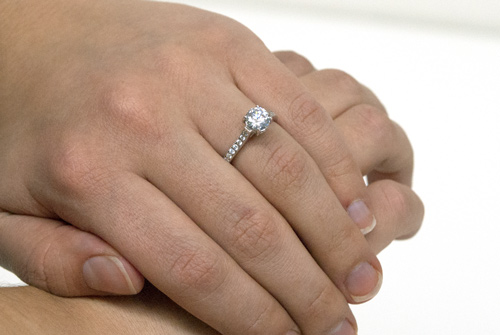
Ready to wear
That’s it: your jewelry is clean and bright again. For rings worn daily, repeating this quick routine every two to three weeks keeps the sparkle from ever fading far.
What to avoid
A few common shortcuts do more harm than good:
Toothpaste, baking soda, and abrasive cleaners
All of them leave fine scratches on gold and platinum that dull the finish over time. Mild dish soap cleans just as well without the damage.
Chlorine and household bleach
Chlorine attacks the alloys in gold and can pit, discolor, and weaken a ring. Take rings off before swimming pools, hot tubs, and cleaning with bleach.
Soaking porous or delicate gems
Pearls, opals, emeralds, and turquoise shouldn’t sit in water or soap. Wipe them with a soft, slightly damp cloth and let them dry fully instead.
Home ultrasonic cleaners
Ultrasonic vibration can loosen stones in worn settings and damage treated gems. Leave ultrasonic cleaning to a jeweler who inspects the piece first.
Frequently asked questions
How often should I clean my jewelry?
For rings you wear every day, a quick at-home cleaning every two to three weeks keeps them bright. Have fine jewelry professionally cleaned and inspected about every six months; a jeweler will also catch loose prongs before a stone is at risk.
Does this work on engagement rings and wedding bands?
Yes. The warm-water-and-dish-soap method is the standard recommendation for gold and platinum wedding bands and diamond engagement rings. Just be extra gentle around pavé and prong settings.
My white gold ring still looks dull after cleaning. Why?
White gold is rhodium-plated for brightness, and the plating wears thin over years of daily wear. Cleaning removes grime but can’t restore plating, but a jeweler can replate the ring to bring back the bright white finish.
What if my jewelry needs more than a quick refresh?
Heavy buildup, scratches, or a stone that seems loose call for professional care. If you bought the piece from us, that service is free for life.
Prefer to leave it to us?
Every piece purchased from 25karats includes free professional ultrasonic cleaning and inspection for the lifetime of the jewelry. Stop by or send it in whenever it needs a deeper clean.