Jewelry Education
Gemstones
Sapphire, ruby, and emerald: what separates them, how color is judged, which will survive daily wear, and the treatment questions to ask before you buy.
Colored stones are graded on the opposite principle from diamonds. A white diamond is valued for the absence of color; a sapphire, ruby, or emerald is valued almost entirely for the presence and quality of it.
That makes buying one a different exercise. Here is the short version, followed by the full guides.
Two things worth knowing first
The three at a glance
| Sapphire | Ruby | Emerald | |
|---|---|---|---|
| Mineral | Corundum | Corundum | Beryl |
| Hardness (Mohs) | 9 | 9 | 7.5–8 |
| Typical clarity | Often eye-clean | Usually included | Always included |
| Common treatment | Heat | Heat; sometimes glass filling | Oil or resin |
| Daily-wear ring | Excellent | Excellent | With care |
| Birthstone | September | July | May |
If you want one recommendation: for an engagement ring or any piece worn daily, sapphire and ruby are the safe choices. Save emerald for earrings, pendants, and rings you can take off.
The guides
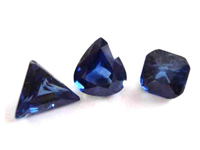
Sapphire
Every corundum color but red. Colors and origins, what Mohs 9 means for daily wear, and how heat treatment affects value.
Read the guide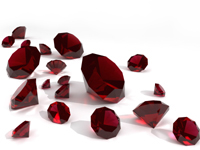
Ruby
The rarest of the three. Pigeon's blood color, why inclusions are expected, and the treatment question that changes everything.
Read the guide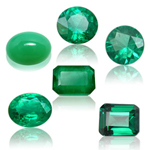
Emerald
Where the emerald cut came from, why a jardin is normal, what oiling does to value, and how to care for one.
Read the guideGemstone color: hue, tone and saturation
The three components that set a colored stone’s value, and how to judge them yourself rather than taking a description on trust.
Before you buy any colored stone
- Ask what has been done to it. Heat is routine and permanent. Fracture filling, diffusion, and dyeing are not, and they change the value substantially.
- Get a report for anything significant. An independent laboratory document should state treatment, and origin if origin is being claimed.
- See it in more than one light. Daylight and ordinary indoor light. A stone that only sings under a spotlight will disappoint at home.
- Match the stone to the wear. Hardness decides whether a ring still looks good in ten years.
- Think about the metal. Yellow gold warms a stone’s color; white metals keep it crisp. See our precious metals guide.
Find your gemstone
Browse our color stone rings, or talk to a consultant about sourcing a particular stone, color, and certification.